
Why Craftsmanship Still Matters in a Fast-Moving World.
True craftsmanship isn't limited to artists or artisans. It appears whenever people choose care, patience, and quality over shortcuts, creating work that stands the test of time.
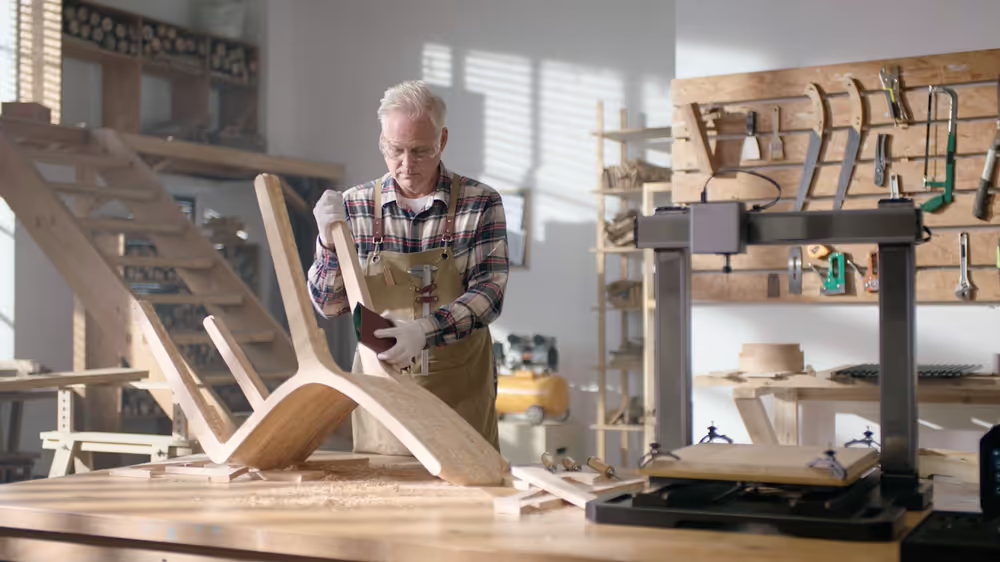
Modern life rewards speed. Meals arrive within minutes, purchases are delivered overnight, and digital tools make it possible to complete tasks faster than ever before. Efficiency has transformed the way we live and work, bringing undeniable convenience to everyday routines. Yet alongside this remarkable progress, something equally valuable can sometimes be overlooked: the satisfaction that comes from creating something with patience, care, and genuine attention to detail.
Craftsmanship is often associated with traditional trades such as woodworking, tailoring, ceramics, or watchmaking. While these professions continue to represent remarkable skill, the spirit of craftsmanship extends much further. It appears whenever a teacher carefully prepares a lesson, a chef refines a recipe over many years, an architect considers how light enters a room, or a software designer spends extra time improving the experience for people who will use a product every day.
In every field, craftsmanship represents a commitment to doing work well—not because someone is watching, but because quality itself matters.
The Difference Between Finishing and Creating
There is an important distinction between completing a task and crafting something meaningful.
Many modern workplaces measure success through speed, deadlines, and output. While efficiency is necessary, it does not always leave room for refinement. Craftsmanship asks a different question: Can this be made better?
That question encourages curiosity rather than urgency. It inspires people to revise a piece of writing one more time, adjust the proportions of a chair until it feels comfortable, or refine a product interface so that using it becomes effortless.
These improvements are rarely dramatic. Most are invisible to anyone except the person doing the work. Yet collectively they define the difference between something that merely functions and something that genuinely delights.
Customers often notice this distinction even if they cannot immediately explain it. A beautifully bound book feels different in the hands. A well-made leather bag ages gracefully instead of wearing out quickly. A thoughtfully designed café invites people to stay longer because every small detail contributes to a welcoming atmosphere.
Quality has a quiet way of revealing itself.
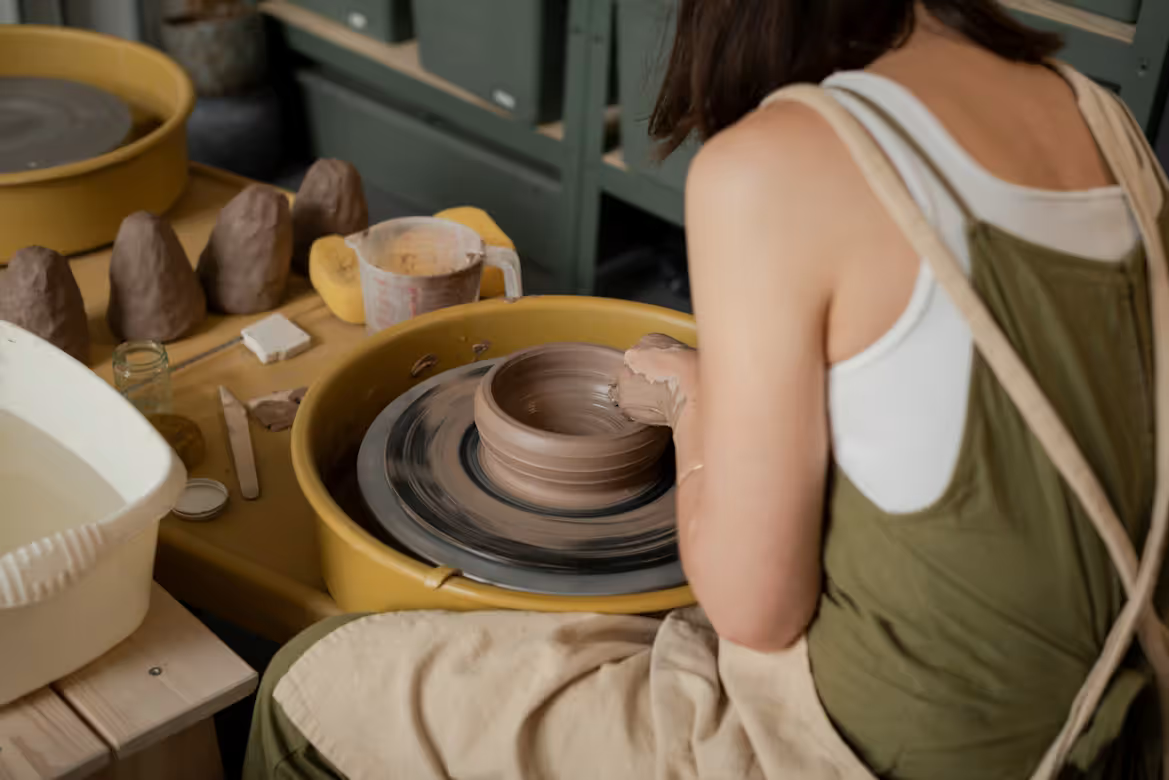
Why Patience Remains an Underrated Skill
Many of history's most admired creations were never rushed. Historic buildings took decades to complete. Handwoven textiles required weeks of careful work. Musical instruments, furniture, and mechanical watches often passed through the hands of multiple skilled craftspeople before reaching their final form.
Although modern technology has accelerated production, patience remains an essential ingredient of excellence.
Learning a profession takes time. Improving a skill requires repetition, mistakes, and thoughtful reflection. The most accomplished professionals are rarely those who sought shortcuts; they are the ones who remained committed to continuous improvement even after achieving success.
This mindset also changes how we experience our own work. Rather than chasing constant recognition, we begin taking satisfaction from the process itself. Each project becomes an opportunity to improve slightly, solve problems more creatively, and leave behind something of lasting value.
Patience transforms work from a series of deadlines into an ongoing practice of learning.
"Craftsmanship is the habit of caring about details long after they stop being obvious to everyone else."
Craftsmanship Exists in Every Profession
It is easy to assume that craftsmanship belongs only to traditional makers, yet examples appear everywhere.
A librarian who thoughtfully curates new arrivals for readers demonstrates craftsmanship through knowledge and care. A gardener who understands the rhythm of each season creates landscapes that continue evolving long after planting day. A photographer waits patiently for the right light instead of settling for the first opportunity. A chef adjusts recipes until each ingredient contributes to a balanced meal.
Even professions shaped by technology continue to rely on craftsmanship. Designers simplify complex interfaces until they feel intuitive. Writers revise sentences until they become clearer and more engaging. Developers improve performance, accessibility, and usability so that digital products become easier for everyone to enjoy.
In every case, craftsmanship reflects an attitude rather than a job title. It is the willingness to improve something because excellence matters even when perfection remains impossible.

Choosing Quality Over Convenience
Consumers are increasingly surrounded by products designed for speed and affordability. While accessibility is valuable, there is growing appreciation for objects that are built to last.
People are repairing furniture instead of replacing it, investing in timeless clothing rather than fast-changing trends, and supporting local artisans whose work reflects individual skill rather than mass production. These choices are not driven solely by nostalgia. They often represent a desire for authenticity, durability, and a stronger connection to the people who create the things we use every day.
Quality also encourages sustainability. When products remain useful for many years, fewer resources are consumed through constant replacement. A well-made dining table passed from one generation to the next tells a richer story than several inexpensive tables discarded over the same period.
Craftsmanship reminds us that value is not always measured by speed or quantity.
Sometimes, it is measured by longevity.
Building a Culture of Pride in Work
Organizations that encourage craftsmanship often produce more than exceptional products. They create environments where people feel proud of what they contribute.
Employees who are trusted to improve processes, refine details, and develop expertise become more engaged because their work carries meaning beyond completing daily tasks. Mentorship also becomes more important, allowing experienced professionals to pass knowledge to newer generations.
This culture benefits customers as well. Products become more reliable, services more thoughtful, and relationships more personal because quality is treated as a shared responsibility rather than a marketing slogan.
Whether someone builds furniture, prepares meals, writes software, or teaches children, the desire to leave work slightly better than it was yesterday creates lasting value that extends far beyond individual projects.
Conclusion
Craftsmanship has never been defined by a particular profession. It is defined by intention.
It appears whenever people choose care over carelessness, improvement over shortcuts, and long-term quality over immediate convenience. In a world where speed often receives the greatest attention, craftsmanship reminds us that the things we remember most are rarely those produced the fastest.
The buildings that become landmarks, the books that inspire generations, the family businesses that earn lasting trust, and the everyday products that quietly improve our lives all share one characteristic: someone cared deeply about making them well.
Perhaps that is the greatest lesson craftsmanship offers.
Meaningful work is not simply about finishing.
It is about leaving something better than we found it.

Richard Sinclair
Richard Sinclair writes about education, lifelong learning, communities, and social change. His articles explore how people continue to grow through knowledge, curiosity, and shared experiences.
Discussion
More from this issue.

The Value of Starting Again at Any Stage of Life.
A new beginning doesn't belong only to the young. Every stage of life offers opportunities to learn, adapt, and discover a new sense of purpose through the courage to start again.
 Elena Rostova

Why Mentorship Matters at Every Stage of Your Career.
The best careers are rarely built alone. Mentorship creates opportunities to learn from experience, gain confidence, and build relationships that continue to shape professional growth for years.
 James Thornton

Rethinking Productivity in an Always-On World.
Modern work often rewards constant activity, but meaningful productivity comes from thoughtful focus, sustainable routines, and knowing when to step away.
James Thornton
· Printed in pixels, with care.