
What Local Markets Tell Us About the Places We Live.
A local market offers far more than fresh ingredients. It tells the story of a community through its food, traditions, conversations, and everyday rituals.
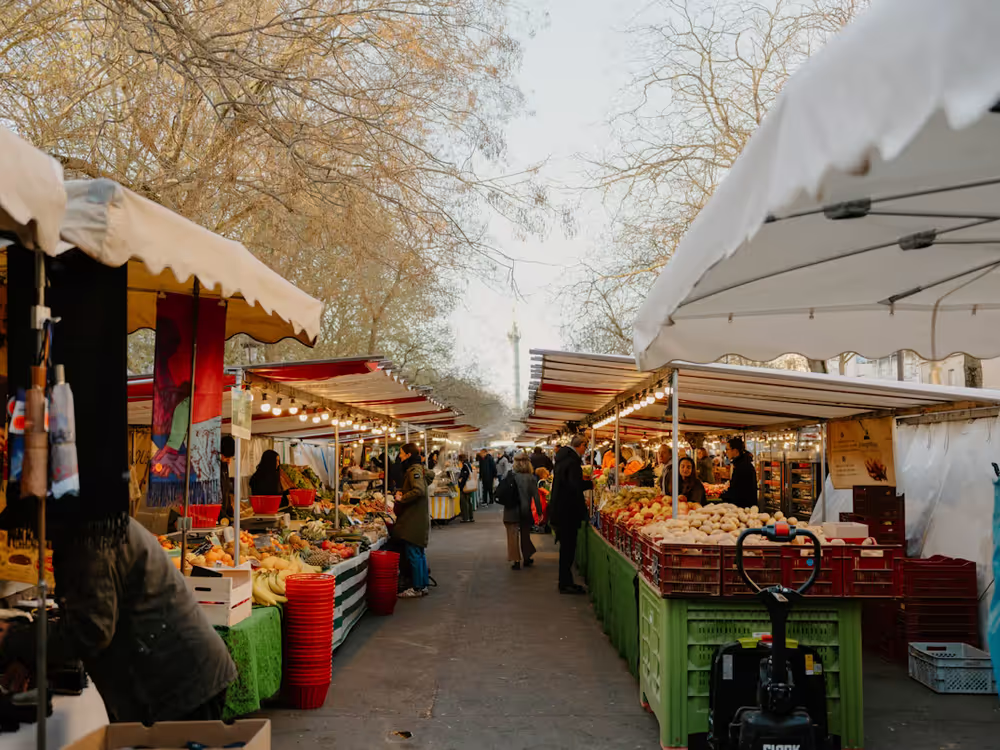
Long before supermarkets became part of everyday life, markets were the heartbeat of towns and cities. Farmers arrived before sunrise with baskets of freshly harvested vegetables, fishmongers prepared the day's catch, bakers filled the air with the aroma of warm bread, and neighbours gathered not only to shop but to catch up on local news. These spaces were lively, noisy, and wonderfully unpredictable. Every stall had its own personality, every season brought something different, and every visit felt slightly unique. While modern retail has changed the way many people buy food, local markets continue to offer something that supermarkets cannot easily replicate—a direct connection between people, place, and tradition.
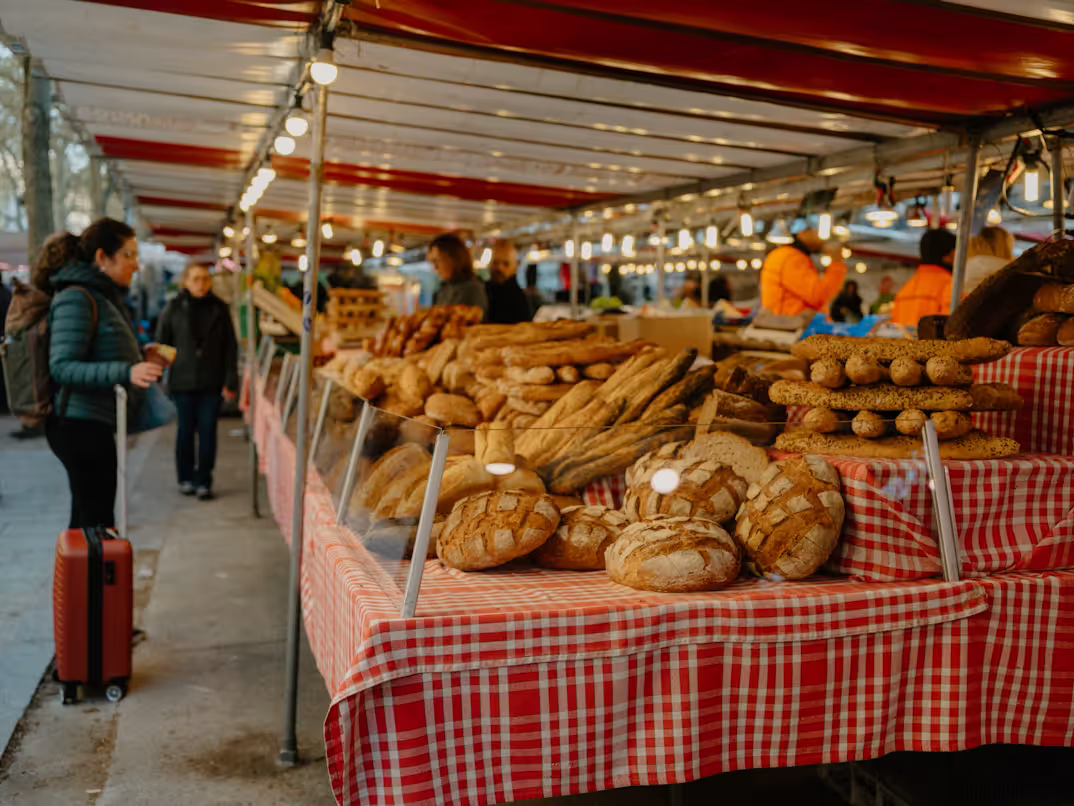
The experience begins long before anything is purchased. Walking through a market means moving at a slower pace, noticing colours, aromas, and conversations that rarely exist inside neatly organised aisles. Seasonal fruit stacked in wooden crates sits beside handmade cheeses, fresh herbs, flowers, and breads prepared only hours earlier. Vendors greet returning customers by name, recommend ingredients for the evening's dinner, and happily explain where today's produce was grown.
These exchanges remind us that food is more than a product. It is part of a living relationship between growers, makers, and the people they serve. The market becomes a meeting place where commerce and community naturally exist side by side.
Every Market Reflects the Character of Its Community
No two markets feel exactly alike because every community has its own traditions, climate, and local produce. Coastal towns often revolve around seafood landed that very morning, while rural regions celebrate harvests shaped by fertile farmland and changing seasons. Urban neighbourhoods introduce influences from around the world, bringing together spices, breads, pastries, and specialty ingredients that reflect generations of migration and cultural exchange.
This diversity gives markets their unique identity. Walking through them offers a glimpse into how people live rather than how destinations are advertised. A stall selling handmade pasta speaks of family recipes passed down over decades. Freshly roasted coffee hints at local cafés that have become gathering places for residents. Seasonal fruit reminds shoppers that nature still determines what arrives on the table, despite the convenience of year-round availability elsewhere.
Markets also celebrate imperfection. Vegetables come in different shapes and sizes, flowers bloom according to the weather, and supplies occasionally sell out before midday. These small variations make each visit feel authentic rather than manufactured, encouraging shoppers to adapt their meals to what is fresh instead of expecting every ingredient at every moment.
The Value of Knowing Where Food Comes From
In recent decades, food has become increasingly convenient. Ingredients travel thousands of kilometres, arrive carefully packaged, and remain available throughout the year regardless of local growing seasons. While this convenience has undeniable benefits, it has also created distance between consumers and the origins of what they eat.
Markets narrow that distance. They encourage questions that are rarely asked in larger retail settings. Which farm grew these tomatoes? What vegetables are naturally in season this month? How was this cheese produced? Conversations like these create a greater appreciation for the effort behind every meal.
Understanding where food comes from often changes purchasing habits as well. Many shoppers begin choosing seasonal ingredients because they taste better and support nearby producers. Others discover new varieties of fruit or vegetables they had never considered before, expanding both their cooking and their understanding of regional agriculture.
Supporting local growers also strengthens communities. Money spent at independent stalls is more likely to remain within the local economy, helping family businesses continue traditions that have often existed for generations. These purchases may seem small individually, yet collectively they help preserve valuable skills and livelihoods.
"A market doesn't simply sell food—it tells the story of the people who grow it, prepare it, and share it."
Markets as Places of Conversation
One of the most remarkable aspects of local markets has little to do with shopping. It is the atmosphere they create.
Unlike many retail environments designed for efficiency, markets invite conversation. People pause to sample fruit, ask for cooking advice, exchange recommendations, or discuss recipes inspired by the week's harvest. Friends unexpectedly meet between stalls and extend their visit over coffee from a nearby vendor. Children learn the names of unfamiliar vegetables while watching skilled artisans prepare fresh food before their eyes.
These seemingly ordinary interactions contribute to a stronger sense of belonging. Familiar faces become part of a weekly routine, transforming shopping into a social experience rather than a task to complete as quickly as possible. For visitors, markets often provide one of the clearest windows into the rhythm of local life. For residents, they become places where community continues to grow through repeated encounters.
In an increasingly digital world, these face-to-face exchanges carry renewed value. They remind us that some experiences cannot be replicated through online ordering or rapid delivery services. The warmth of a recommendation from someone who has grown the produce themselves, or the simple pleasure of greeting a familiar vendor, adds a human dimension that convenience alone cannot replace.
Preserving Traditions for Future Generations
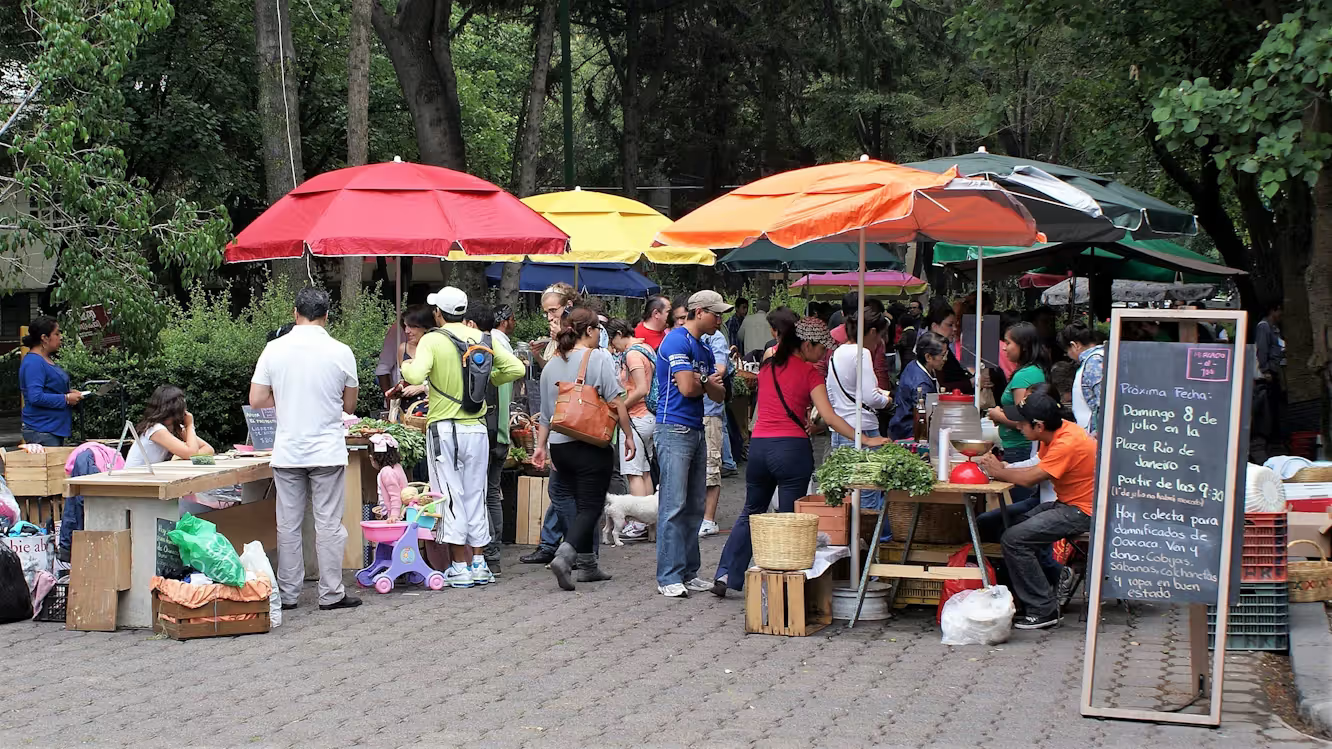
Markets have always adapted to changing times, yet their essential purpose remains remarkably consistent. They bring people together around food, support local enterprise, and preserve traditions that might otherwise disappear. Young entrepreneurs now stand beside experienced growers, introducing organic farming, handcrafted products, and sustainable packaging while continuing the market's long tradition of personal service.
Families who visit together pass these experiences from one generation to the next. Children discover where ingredients originate rather than assuming food simply appears on supermarket shelves. Seasonal celebrations become annual traditions, and favourite vendors become familiar faces whose stories become part of the neighbourhood itself.
As cities continue to evolve, markets offer something increasingly valuable: a sense of continuity. They remind communities that progress does not require abandoning local identity. Instead, tradition and innovation can comfortably exist side by side, enriching everyday life while preserving the character of a place.
Conclusion
Local markets are often appreciated for the freshness of their produce, but their true importance extends far beyond food. They are places where conversations begin, traditions endure, and communities remain connected through shared experiences.
Every visit offers more than ingredients for the week's meals. It provides an opportunity to support local producers, discover seasonal flavours, and experience the rhythm of a neighbourhood through the people who know it best. In a world where convenience increasingly defines the way we shop, markets invite us to slow down, ask questions, and reconnect with the origins of what we eat.
Perhaps that is why they continue to thrive despite changing habits. They offer something timeless: a reminder that the strongest communities are often built around simple moments shared over fresh food, familiar faces, and the traditions that give every place its unique identity.

Priya Mehta
Priya Mehta explores lifestyle, community, wellbeing, and cultural traditions from a global perspective. She enjoys telling human-centered stories that celebrate everyday life and meaningful connections.
Discussion
More from this issue.

Why Sharing a Meal Still Brings People Together.
Long before food became content for social media, it was a reason for people to gather. Shared meals continue to create moments of connection that enrich everyday life.
 Elena Rostova
Why Seasonal Eating Makes Every Meal More Meaningful.
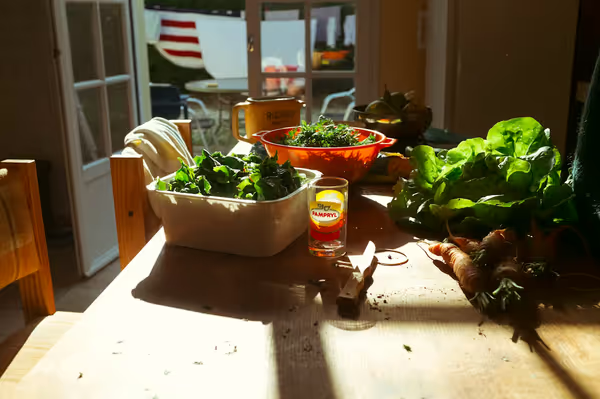
Seasonal eating isn't about strict food rules. It's about enjoying ingredients when they're naturally at their best while building a stronger connection to the places and people that produce them.
 Priya Mehta
· Printed in pixels, with care.