
Why Curiosity Is the Foundation of Lifelong Learning.
Curiosity is more than a childhood trait. It is a lifelong habit that encourages learning, strengthens creativity, and helps us navigate a world that never stops changing.

Learning is often associated with classrooms, exams, and graduation ceremonies. These milestones undoubtedly play an important role in shaping our knowledge, yet education does not end when formal schooling is complete. In many ways, the most meaningful learning begins afterward, when curiosity rather than curriculum becomes the driving force. The questions we choose to ask, the books we decide to read, the conversations we pursue, and the experiences we seek all contribute to a lifetime of continuous growth.
The modern world changes at an extraordinary pace. New technologies emerge, industries evolve, scientific discoveries reshape understanding, and cultural conversations introduce fresh perspectives. Keeping up with these changes requires more than professional training alone. It requires an attitude of curiosity that encourages exploration without fear of not knowing every answer.
Curiosity transforms learning from an obligation into a habit. Instead of viewing education as something completed in youth, it becomes an ongoing journey that enriches both personal and professional life.
Asking Better Questions
Children naturally ask endless questions about the world around them. Why does the sky change color? How do birds know where to migrate? What happens inside a seed before it becomes a tree? Somewhere along the path to adulthood, many people begin asking fewer questions, often believing they should already know the answers.
Yet curiosity flourishes when questions continue.
Professionals improve by exploring unfamiliar ideas instead of relying solely on established methods. Readers expand their perspectives by choosing books outside their usual interests. Travelers gain deeper cultural understanding by listening rather than assuming. Even everyday conversations become more meaningful when approached with genuine interest instead of quick conclusions.
Learning begins not with certainty but with the willingness to remain curious. Every thoughtful question opens the door to greater understanding, reminding us that knowledge grows through exploration rather than assumption.
Learning Beyond the Classroom
Education today exists in countless forms beyond traditional institutions.
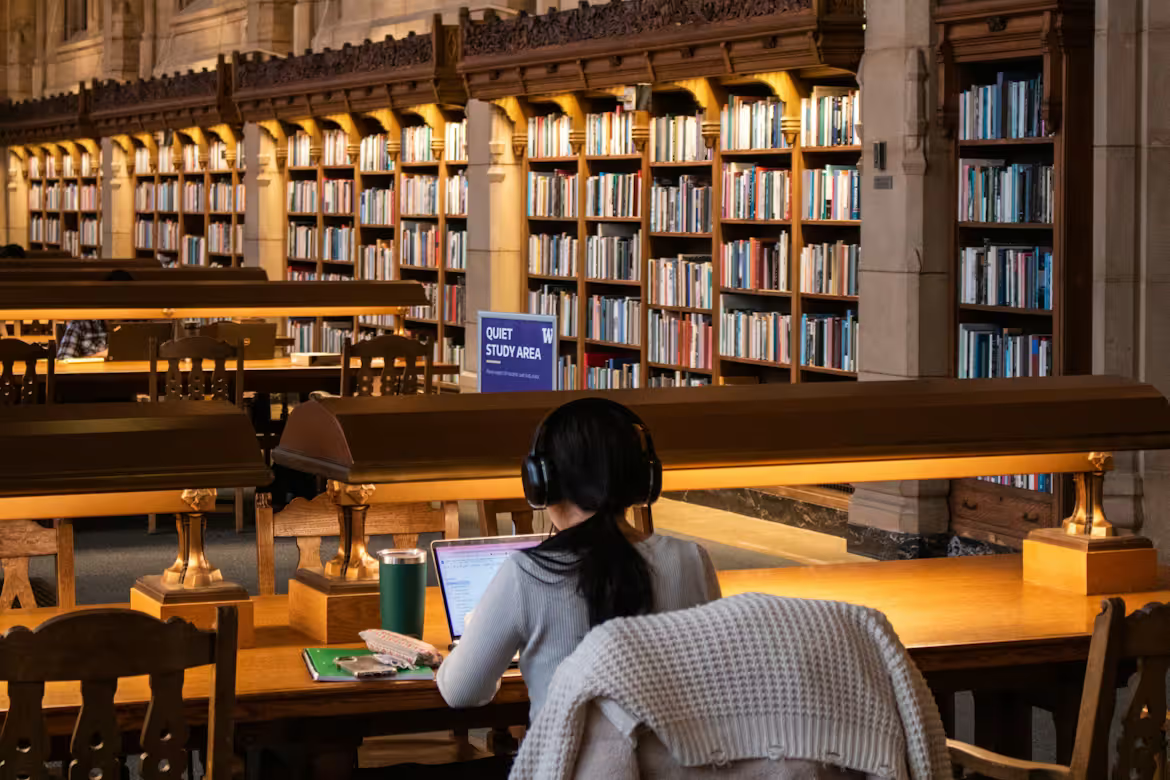
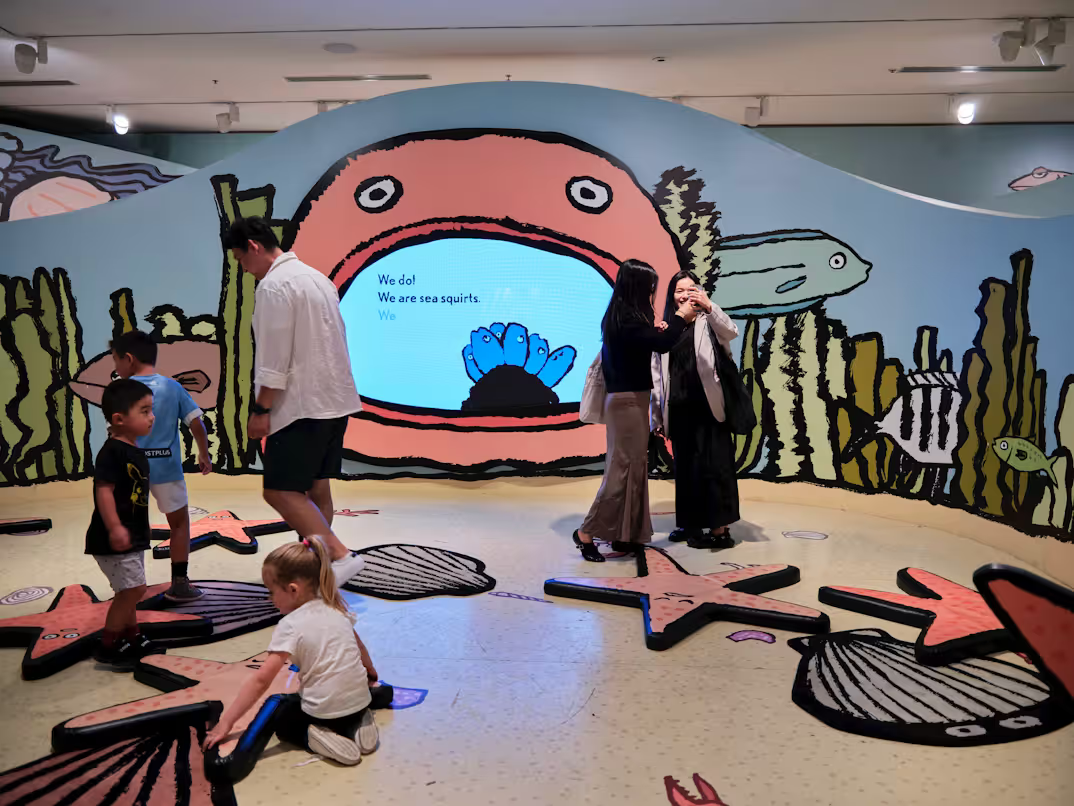
Libraries provide access to ideas collected across generations. Museums preserve history while inspiring future innovation. Podcasts, documentaries, workshops, community lectures, and thoughtful conversations all contribute to a broader understanding of the world.
Technology has also expanded opportunities for learning. A person can study a new language, explore astronomy, understand architecture, or discover regional cooking traditions from almost anywhere. While access to information has never been greater, meaningful learning still depends on curiosity rather than convenience.
Simply collecting information is not enough.
True learning happens when new knowledge changes the way we think, solve problems, or understand others.
This transformation requires attention, reflection, and a genuine desire to keep growing.
"Curiosity keeps education alive long after the classroom is left behind."
Curiosity Encourages Creativity
Innovation rarely appears from repeating familiar ideas.
Creative thinkers often begin by exploring unexpected connections between different subjects. A designer may study nature to improve products. A chef might learn from history while developing new recipes. An entrepreneur could find inspiration in psychology rather than business textbooks.
Curiosity encourages these connections because it removes artificial boundaries between disciplines.
Reading broadly, visiting exhibitions, attending cultural events, or simply speaking with people from different backgrounds introduces perspectives that would otherwise remain hidden. These experiences expand imagination and encourage more thoughtful solutions to everyday challenges.
Creative growth therefore depends not only on expertise but also on openness to learning from unexpected places.
Staying Curious in Everyday Life
Curiosity does not require dramatic adventures or advanced degrees.
It can begin with ordinary moments.
Trying a new recipe, learning about the history of your neighborhood, visiting an unfamiliar exhibition, reading a biography, asking an older family member about their childhood, or listening carefully to someone with a different perspective all encourage continuous learning.
These small experiences gradually broaden our understanding of the world.
They also strengthen empathy.
When curiosity replaces assumptions, conversations become richer, disagreements become opportunities to learn, and unfamiliar experiences become invitations rather than obstacles.
The result is not simply greater knowledge but a more thoughtful way of living.
Curiosity Builds a Future of Possibilities
The future will continue bringing new technologies, changing careers, and evolving communities.
People who remain curious are often better prepared to adapt because they view change as an opportunity to learn rather than a reason to feel overwhelmed. Instead of fearing unfamiliar ideas, they approach them with thoughtful questions and a willingness to explore.
This mindset benefits every stage of life.
Students develop confidence, professionals remain adaptable, retirees discover new interests, and families continue learning together across generations.
Curiosity reminds us that education has no final chapter.
As long as we continue asking questions, there will always be something meaningful to discover.
Conclusion
Lifelong learning begins with a simple decision.
Remain curious.
Every question, conversation, book, journey, and new experience expands our understanding of the world while deepening our appreciation for it. Formal education provides an important foundation, but curiosity ensures that learning continues throughout every stage of life.
In a rapidly changing world, knowledge will always remain valuable.
But the desire to keep learning may be even more important.
Curiosity transforms ordinary days into opportunities for discovery, reminding us that the most rewarding education is often the one we choose for ourselves.

Priya Mehta
Priya Mehta explores lifestyle, community, wellbeing, and cultural traditions from a global perspective. She enjoys telling human-centered stories that celebrate everyday life and meaningful connections.
Discussion
More from this issue.

Why Mentorship Matters at Every Stage of Your Career.
The best careers are rarely built alone. Mentorship creates opportunities to learn from experience, gain confidence, and build relationships that continue to shape professional growth for years.
 James Thornton

Why Lifelong Learning Matters More Than Ever.
Learning doesn't end with graduation. The most rewarding education often happens through everyday experiences, thoughtful conversations, and a willingness to remain curious throughout life.
 Richard Sinclair
· Printed in pixels, with care.