
Why Independent Bookstores Still Matter in the Digital Age.
More than places to buy books, independent bookstores have become cultural landmarks where conversations begin, communities gather, and curiosity continues to grow.
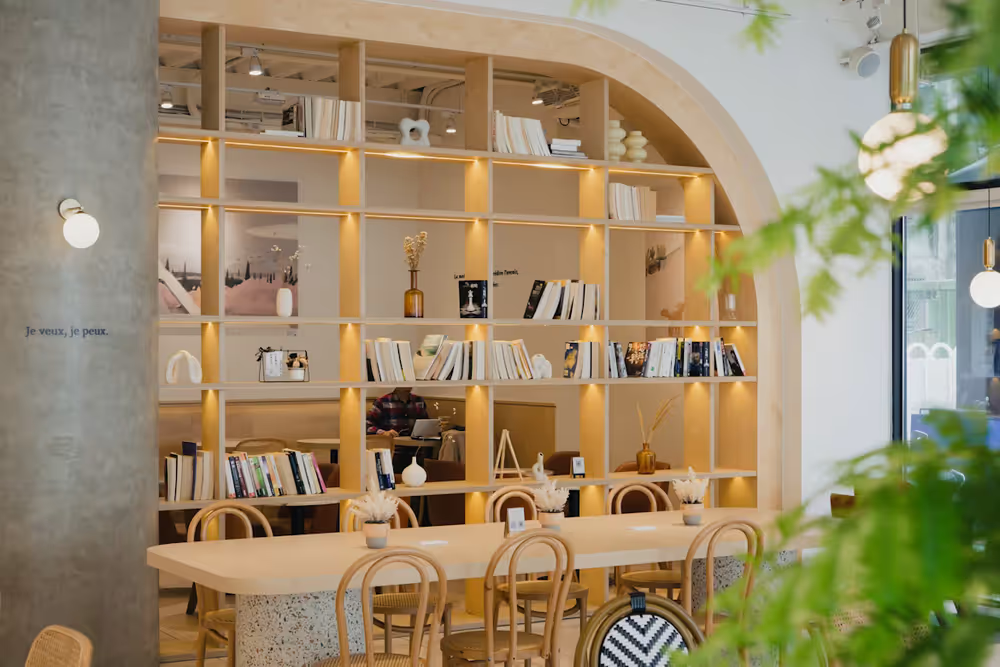
The way we buy books has changed dramatically over the past two decades. With a few taps on a smartphone, almost any title can arrive at our doorstep within days, sometimes even hours. Digital libraries place thousands of books inside a single device, while recommendation algorithms promise to predict exactly what we might enjoy next. Convenience has undoubtedly transformed reading, making literature more accessible than ever before. Yet despite these remarkable advances, independent bookstores continue to occupy a special place in towns and cities around the world. Their survival is not driven by efficiency or scale, but by something far more meaningful: the human experience of discovering stories together.
Walking into an independent bookstore feels fundamentally different from browsing an online catalogue. The pace immediately slows. Shelves invite exploration rather than urgency, and the carefully selected displays reflect the personality of the people who curate them. Instead of endless search results ranked by popularity, readers encounter handwritten recommendation cards, themed collections, and books they may never have searched for themselves.
These small details transform shopping into discovery. Every visit becomes an opportunity to leave with something unexpected, whether it is a debut novel from a local writer, a beautifully illustrated history book, or a collection of essays that challenges familiar perspectives.
A Place Where Recommendations Feel Personal
One of the greatest strengths of an independent bookstore is its people. Booksellers rarely recommend titles based solely on sales figures or automated suggestions. Instead, they listen.
A brief conversation about a recently finished novel or a favourite author often leads to thoughtful recommendations that feel remarkably personal. Experienced booksellers remember returning customers, recognise changing interests, and suggest books that expand rather than simply repeat existing preferences.
This human connection creates trust. Readers begin to view the bookstore not simply as a retailer but as a reliable guide through an ever-growing world of literature. Over time, these conversations introduce unfamiliar genres, overlooked writers, and perspectives that algorithms may never have considered.
Browsing itself becomes part of the pleasure. Readers pick up books because of an intriguing cover, an opening paragraph, or a recommendation written by someone who genuinely loved the story. Serendipity—the joy of finding something unplanned—remains one of the defining experiences of visiting a physical bookstore.

More Than a Shop
The best independent bookstores function as cultural gathering places. They host author talks, poetry readings, children's story hours, book clubs, writing workshops, and community discussions. On any given evening, the same space that quietly welcomed readers during the afternoon may become a lively venue where ideas are exchanged and friendships begin.
These events remind us that books are not only objects to be purchased and read in isolation. They are starting points for conversation. A novel can inspire debate about society, a travel memoir can encourage curiosity about distant cultures, and a history book can reshape how a community understands its own past.
Many bookstores also champion local authors whose work might otherwise struggle to find visibility. By giving shelf space to regional voices, they help preserve stories rooted in the places where readers actually live. This creates a literary landscape that feels more diverse, personal, and connected to local identity.
Unlike larger retail environments, independent bookstores often reflect the neighbourhood around them. Their collections evolve alongside the interests of the communities they serve, making each shop unique rather than interchangeable.
"A great bookstore doesn't just sell books—it creates readers, conversations, and communities."
The Joy of Browsing Without an Objective
Modern life encourages efficiency. We search for exactly what we need, purchase it quickly, and move on to the next task. Bookstores invite a different mindset.
Many readers enter without a shopping list. They wander through travel writing before drifting toward architecture, pause to admire beautifully designed cookbooks, or spend twenty minutes reading the opening pages of a novel simply because the title caught their attention.
This unstructured exploration is surprisingly valuable. It encourages curiosity without pressure and creates opportunities for unexpected learning. A biography leads to an interest in history. A photography collection inspires weekend walks through the city. A book about gardening encourages someone to begin growing herbs at home.
These discoveries rarely happen because they were planned. They emerge because readers allow themselves time to browse without urgency. In an age where so many digital experiences are designed to predict our preferences, wandering through a bookstore reminds us that some of life's most rewarding discoveries happen by accident.
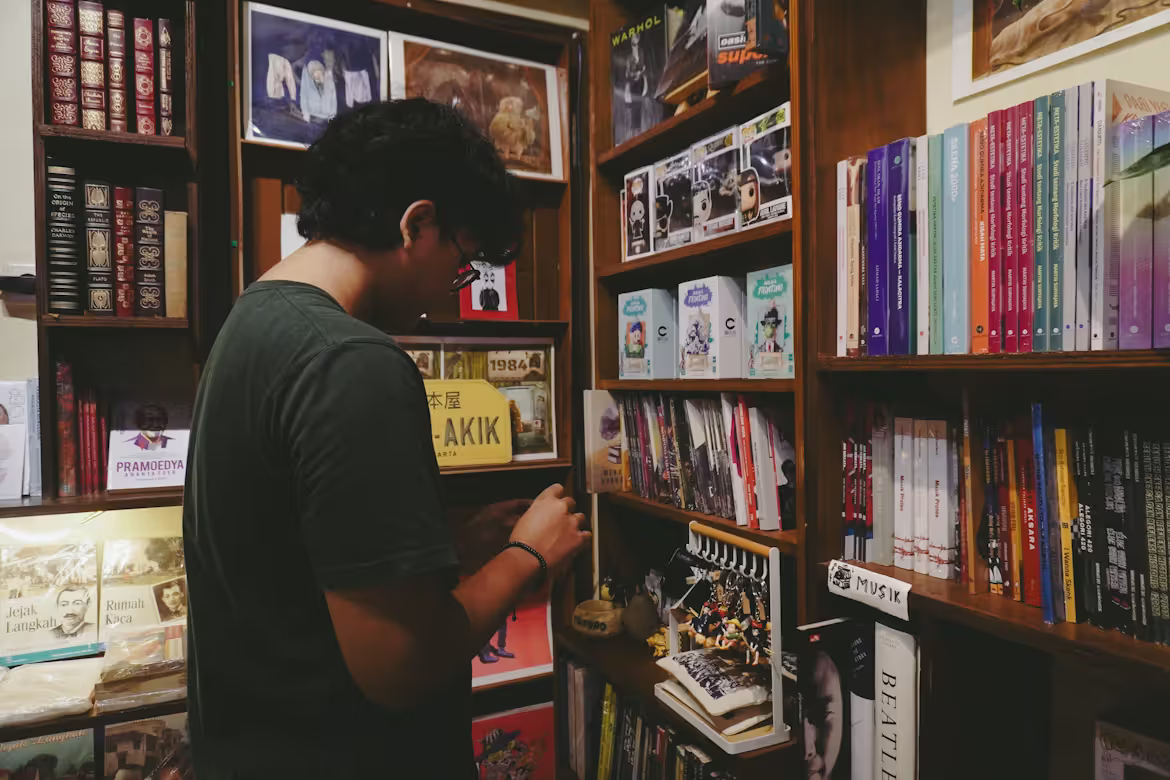
Preserving Spaces That Encourage Curiosity
Every independent bookstore tells a story beyond the books it sells. Some occupy historic buildings that have welcomed readers for generations. Others have become neighbourhood landmarks where families return year after year. Their continued presence reflects the support of communities that value more than convenience.
Choosing to shop locally helps these spaces remain part of everyday life. It supports small businesses, creates opportunities for cultural events, and ensures that future generations inherit places where curiosity is celebrated rather than rushed.
This does not mean online booksellers and digital reading platforms lack value. They have expanded access to literature in remarkable ways and introduced countless people to reading. The two experiences can comfortably coexist.
The difference lies in what each one offers. Digital platforms excel at speed and availability. Independent bookstores excel at atmosphere, conversation, and discovery. Together they remind us that reading is not only about acquiring books but about building a lifelong relationship with ideas.
Conclusion
Independent bookstores continue to matter because they offer something increasingly rare: spaces where people are encouraged to slow down, explore, and connect through shared curiosity.
Their shelves hold more than printed pages. They preserve local culture, introduce unfamiliar voices, support creative communities, and create opportunities for conversations that extend well beyond literature itself. Every recommendation, every author event, and every unexpected discovery contributes to a richer reading experience that cannot be measured solely by convenience.
In a digital age defined by speed, these bookstores remind us that some experiences become more meaningful precisely because they ask us to take our time.
The next time you pass an independent bookstore, consider stepping inside—not with a title in mind, but with a willingness to discover one.

Richard Sinclair
Richard Sinclair writes about education, lifelong learning, communities, and social change. His articles explore how people continue to grow through knowledge, curiosity, and shared experiences.
Discussion
More from this issue.

Why Curiosity Is the Foundation of Lifelong Learning.
Curiosity is more than a childhood trait. It is a lifelong habit that encourages learning, strengthens creativity, and helps us navigate a world that never stops changing.
 Priya Mehta

Why Some Books Are Worth Reading More Than Once.
A favorite book rarely stays the same. As our lives change, the stories we revisit often reveal new meanings, reminding us that reading is as much about personal growth as it is about the pages themselves.
 Victoria Pemberton

How Books Shape the Way We See the World.
Every book offers more than information—it offers a different perspective. Reading allows us to experience unfamiliar places, understand diverse viewpoints, and discover ideas that continue to influence us long after the final page.
 Richard Sinclair
· Printed in pixels, with care.