
Why Local Traditions Still Matter in a Changing World.
Local traditions are more than customs passed through generations. They preserve identity, strengthen communities, and remind us that culture is lived every day.
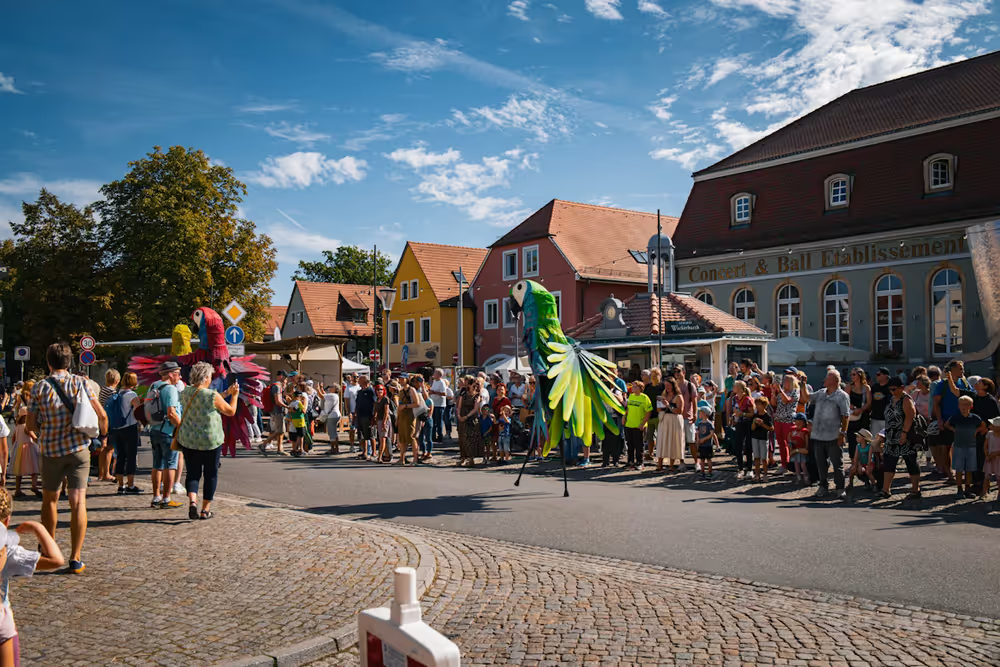
The modern world moves quickly. New technologies reshape how we work, travel becomes easier than ever before, and ideas spread across continents within moments. This constant exchange has brought extraordinary opportunities, allowing people to learn from cultures far beyond their own. Yet amid this remarkable pace of change, many communities are asking an important question: how do we embrace the future without losing the traditions that help define who we are?
Traditions are often misunderstood as relics of the past, preserved only for museums or annual celebrations. In reality, they continue to shape everyday life in countless subtle ways. They appear in recipes prepared for family gatherings, songs sung during local festivals, craftsmanship handed down through generations, seasonal celebrations, and community rituals that bring people together year after year.
These customs remind us that culture is not something we simply inherit. It is something we actively practice, share, and renew through everyday participation.
More Than Memories
Traditions provide continuity in a world that rarely stands still.
Children learn family recipes from grandparents. Local celebrations introduce younger generations to stories that shaped their communities. Artisans continue techniques that have survived for centuries, not because they reject innovation, but because they recognize the value of preserving knowledge that cannot easily be replaced.
These experiences create a sense of belonging. They remind people that they are part of a story much larger than themselves.
Importantly, traditions are not frozen in time. They naturally evolve as communities change. New influences are adopted, customs adapt to modern life, and celebrations welcome new participants while remaining connected to their origins.
This ability to evolve is one reason traditions continue to remain relevant rather than becoming historical curiosities.
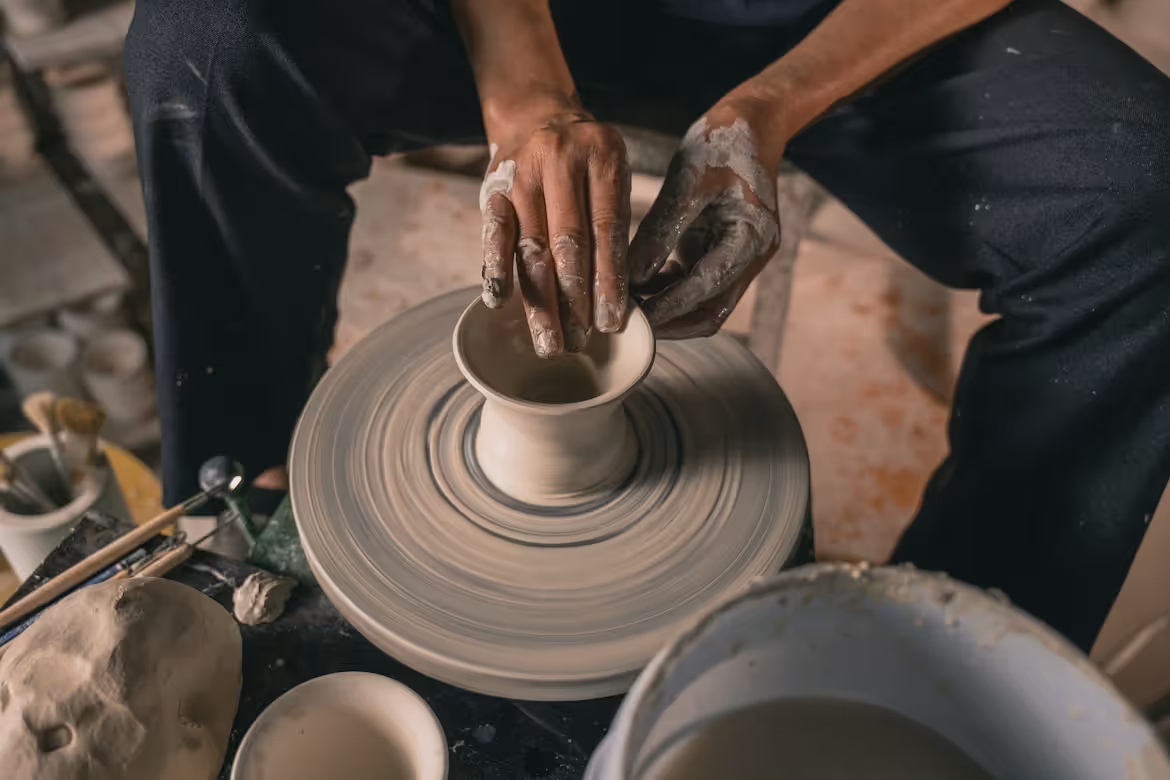
Shared Experiences Build Stronger Communities
Many traditions exist not because they are efficient but because they bring people together.
Harvest festivals, neighborhood celebrations, cultural performances, seasonal markets, and religious or civic gatherings all encourage participation across generations. They provide opportunities for neighbors to meet, families to reconnect, and visitors to experience the character of a place beyond its landmarks.
These occasions also strengthen local identity. Every community has stories worth celebrating, whether expressed through music, architecture, food, or public celebrations. When residents actively participate in these traditions, they reinforce the values and experiences that make their community unique.
This shared participation creates memories that remain meaningful long after the event itself has ended.
"Traditions keep communities connected by giving every generation something meaningful to share."
Keeping Heritage Alive Through Everyday Choices
Preserving culture does not always require large festivals or formal ceremonies.
Choosing to shop at family-owned businesses, preparing traditional meals, supporting local artists, attending community performances, or learning regional history all contribute to keeping cultural heritage alive. These actions may appear small, yet together they ensure traditions remain active rather than simply remembered.
Schools, libraries, museums, and community organizations also play an important role by introducing younger generations to local history and encouraging participation rather than passive observation.
Culture survives because people continue practicing it.
Everyday participation is therefore just as valuable as annual celebration.
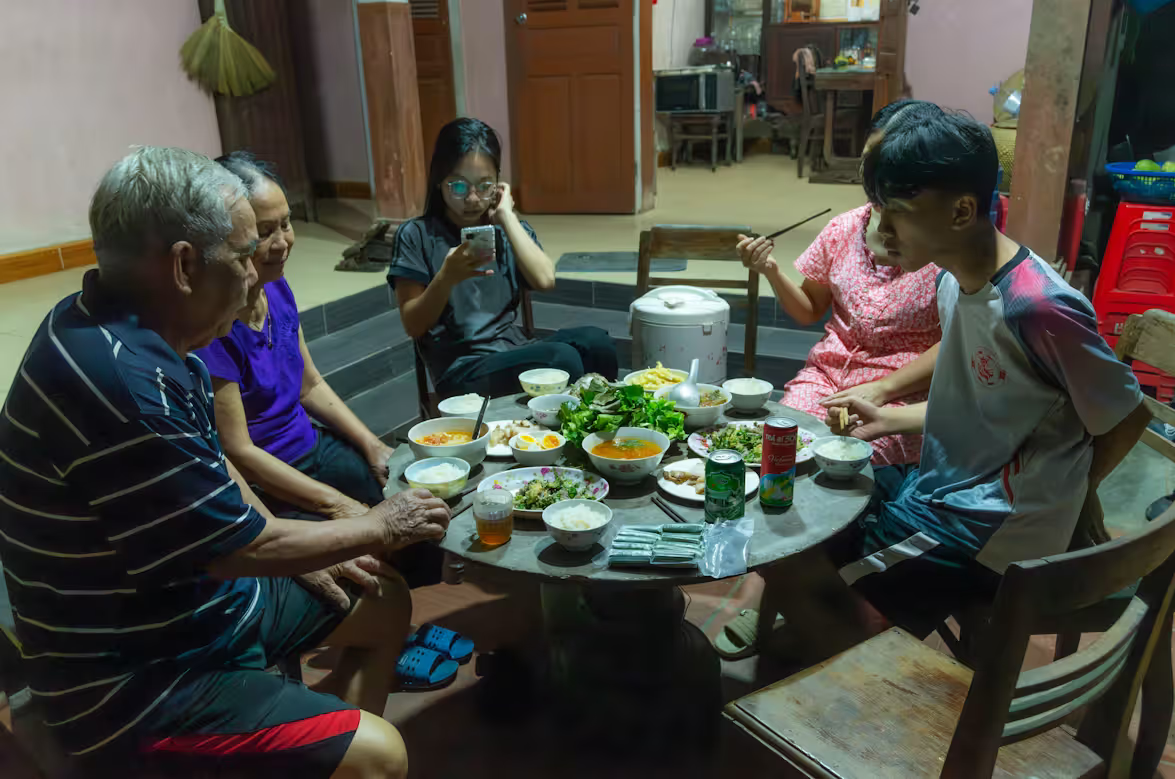
Tradition and Innovation Can Grow Together
One of the most common misconceptions is that tradition and progress exist in opposition.
History suggests otherwise.
Many communities successfully combine historic architecture with modern design, preserve traditional recipes while embracing new ingredients, and celebrate centuries-old festivals using contemporary forms of communication to reach wider audiences.
Innovation often becomes stronger when rooted in cultural understanding. Designers draw inspiration from regional craftsmanship. Musicians reinterpret traditional melodies. Chefs introduce modern techniques while respecting local ingredients and culinary heritage.
Rather than limiting creativity, tradition frequently provides the foundation upon which new ideas are built.
The future becomes richer when it remembers where it came from.
Looking Ahead Without Forgetting the Past
Globalization has made the world feel smaller, but it has also increased appreciation for authentic local experiences.
Travelers increasingly seek regional food, traditional markets, independent artisans, and cultural festivals because these experiences reveal something unique about a destination. Residents, too, often rediscover the value of traditions after recognizing how quickly they can disappear if left unsupported.
Preserving culture does not mean resisting change.
It means ensuring that progress leaves room for memory, identity, and community.
By valuing both innovation and heritage, societies create a future that feels connected rather than disconnected from its roots.
Conclusion
Traditions remain meaningful because they remind us where we come from while helping shape where we are going.
They strengthen communities, preserve knowledge, celebrate identity, and encourage people to gather around shared experiences that might otherwise be forgotten. In an increasingly connected world, these local customs provide something that cannot easily be replicated elsewhere—a genuine sense of place.
The future will continue to bring change.
But communities that value their traditions often discover that the strongest foundations are those built by generations working together.

Sophia Harrington
Sophia Harrington covers home life, sustainability, and practical living. Her work encourages readers to create comfortable spaces and adopt everyday habits that support a healthier lifestyle.
Discussion
More from this issue.

Why Some Books Are Worth Reading More Than Once.
A favorite book rarely stays the same. As our lives change, the stories we revisit often reveal new meanings, reminding us that reading is as much about personal growth as it is about the pages themselves.
 Victoria Pemberton

Why Quiet Moments Matter More Than Ever.
In a culture filled with constant noise and endless distractions, quiet moments offer something increasingly rare—the chance to think clearly, reconnect with ourselves, and appreciate the present.
 James Thornton

How Books Shape the Way We See the World.
Every book offers more than information—it offers a different perspective. Reading allows us to experience unfamiliar places, understand diverse viewpoints, and discover ideas that continue to influence us long after the final page.
 Richard Sinclair
· Printed in pixels, with care.