
Why Quiet Moments Matter More Than Ever.
In a culture filled with constant noise and endless distractions, quiet moments offer something increasingly rare—the chance to think clearly, reconnect with ourselves, and appreciate the present.

There was a time when quiet naturally found its way into everyday life. A morning train ride often meant looking out of the window rather than down at a screen. Waiting in line offered a chance to observe the people around us instead of checking another notification. Even evenings carried a different rhythm, with conversations, books, or simple reflection filling the hours before sleep.
Today, silence is harder to find. Music follows us through headphones, televisions play in the background, phones vibrate throughout the day, and social platforms compete endlessly for our attention. We have become remarkably good at avoiding empty moments, often without realizing what those moments once offered.
Yet quiet has never been more valuable.
It gives our minds the opportunity to process experiences, encourages creativity, and reminds us that not every moment needs to be filled. In a culture that celebrates constant activity, choosing stillness has become a meaningful act of balance rather than a sign of doing less.
Why We Have Become Uncomfortable with Silence
Modern life encourages continuous engagement. There is always another message to answer, another article to read, or another video waiting to autoplay. Convenience has made entertainment and information available at any moment, leaving very little space for genuine pauses.
Over time, many people begin to associate silence with boredom. A few minutes without stimulation can feel unfamiliar, even uncomfortable. Instead of sitting quietly before a meeting or enjoying a peaceful walk, we instinctively reach for our phones.
This habit isn't simply about technology. It's also about our relationship with time. We've grown accustomed to measuring every hour by how productive or entertaining it was, forgetting that some of life's most meaningful moments happen when nothing remarkable appears to be happening at all.
A quiet afternoon spent reading, listening to rain against the window, or walking through a nearby park may never appear impressive on a calendar. Yet those experiences often leave us feeling calmer and more refreshed than an entire day spent rushing from one task to another.
Silence isn't empty.
It's where thoughts have room to settle.

Quiet Spaces Inspire Clearer Thinking
Some of our best ideas rarely arrive while we're hurrying.
They appear during a morning walk, while preparing a meal, sitting beside the sea, or looking out of a train window. These moments share something in common—they create enough mental space for reflection.
Creative thinkers, writers, designers, and scientists have long spoken about the importance of stepping away from constant activity. Breakthroughs often happen after periods of rest rather than during endless hours of concentration.
The same principle applies to everyday life.
When our attention is constantly divided between conversations, notifications, and responsibilities, our minds remain occupied with reacting. Quiet moments shift us from reacting to observing. They help us recognize patterns, reconsider priorities, and approach challenges with greater clarity.
This doesn't require hours of meditation or a retreat into the countryside.
Even fifteen uninterrupted minutes each day can become an opportunity to reset.
Whether it's enjoying coffee before the household wakes up, taking a walk without headphones, or reading a chapter of a favorite book, these pauses gently remind us that our attention deserves moments of rest as much as our bodies do.
"Silence isn't the absence of life—it's often where life becomes easier to notice."
Making Room for Quiet Every Day
Finding quiet doesn't always mean escaping to a remote destination. More often, it begins by changing small habits within the life we already have.
It might mean leaving the phone in another room during dinner. Opening the windows in the morning instead of turning on the television. Walking to a nearby café without checking messages, or spending the last few minutes of the day reflecting instead of scrolling.
These choices are simple, yet their impact grows over time.
Quiet moments strengthen our ability to focus, improve the quality of conversations, and help us become more aware of the people and places around us. They encourage gratitude for ordinary experiences that are easily overlooked when every day feels rushed.
Perhaps most importantly, silence reminds us that our value isn't measured by constant activity.
Sometimes the most productive thing we can do is pause.
Not because we've finished everything on our to-do list, but because rest allows us to return with greater energy, clearer thinking, and a renewed appreciation for the life unfolding around us.

Conclusion
The world isn't likely to become quieter anytime soon. Technology will continue to evolve, information will arrive faster, and our schedules will remain full. Waiting for silence to appear naturally often means waiting forever.
Instead, quiet becomes something we choose.
A few uninterrupted minutes before work. A walk without distractions. An evening spent reading instead of endlessly scrolling. These moments may seem small, but together they create a different rhythm—one that allows us to think more clearly, connect more deeply, and experience everyday life with greater presence.
In many ways, quiet is no longer an absence.
It is a conscious decision to make space for what truly matters.

James Thornton
James Thornton covers work, society, and the changing ways people live and collaborate. His writing focuses on workplace culture, communities, and the evolving relationship between technology and daily life.
Discussion
More from this issue.

Why Some Books Are Worth Reading More Than Once.
A favorite book rarely stays the same. As our lives change, the stories we revisit often reveal new meanings, reminding us that reading is as much about personal growth as it is about the pages themselves.
 Victoria Pemberton
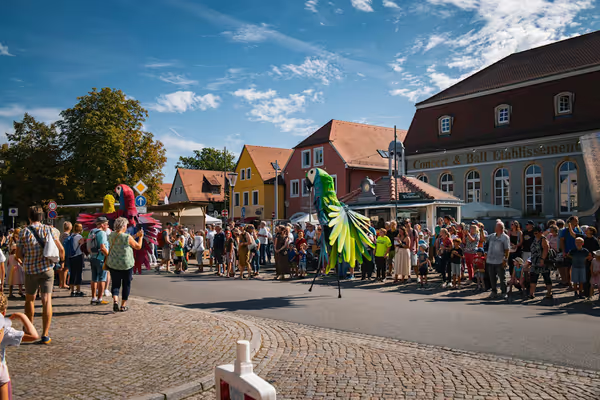
Why Local Traditions Still Matter in a Changing World.
Local traditions are more than customs passed through generations. They preserve identity, strengthen communities, and remind us that culture is lived every day.
 Sophia Harrington

How Books Shape the Way We See the World.
Every book offers more than information—it offers a different perspective. Reading allows us to experience unfamiliar places, understand diverse viewpoints, and discover ideas that continue to influence us long after the final page.
 Richard Sinclair
· Printed in pixels, with care.