
The Art of Living Intentionally in a World That Never Slows Down.
Modern life rewards speed, but meaningful living rarely happens in a hurry. Discover how slowing down, making intentional choices, and embracing everyday moments can lead to a richer, more balanced life.

There was a time when waiting was simply part of everyday life. Waiting for a letter to arrive, for photographs to be developed, or for the weekend after a long week of work. Those pauses, though ordinary, created space for reflection and anticipation.
Today, almost everything is instant. Information travels across the world in seconds, conversations happen continuously through screens, and our calendars are often filled weeks in advance. Technology has made life more connected and efficient than ever before, yet many people find themselves feeling increasingly distracted, overwhelmed, and short on time.
Being busy has quietly become a badge of honor. Conversations often begin with, "I've been so busy," as though a full schedule is proof of a successful life. Days become measured by completed tasks rather than meaningful experiences, leaving little room to appreciate the moments happening between deadlines.
Intentional living challenges this way of thinking.
It isn't about rejecting ambition, disconnecting from modern life, or striving for perfection. Instead, it's about making conscious choices—choosing where to invest your time, what deserves your attention, and which habits support the kind of life you truly want to build.
At its heart, intentional living reminds us that a meaningful life is rarely created through dramatic changes. More often, it grows from the small decisions we make every day: sharing an uninterrupted meal with loved ones, taking a walk without checking our phones, reading before bed instead of scrolling endlessly, or simply allowing ourselves a few quiet moments before the day begins.
These ordinary choices may seem insignificant on their own, yet over time they shape how we experience our lives.
When Every Moment Demands Our Attention
One of the defining characteristics of modern life is the constant competition for our attention.
Notifications arrive before breakfast. Emails continue long after the workday ends. Social media platforms, streaming services, news alerts, and endless digital conversations encourage us to keep looking, clicking, and responding. Even moments that once offered quiet reflection—waiting for a train, sitting in a café, or standing in line—are now often filled by another glance at a screen.
The result isn't simply that we're busy.
It's that our attention is rarely allowed to settle.
Research into attention and cognitive load consistently shows that frequent interruptions make it harder to concentrate, retain information, and feel mentally refreshed. While technology has undoubtedly improved many aspects of daily life, the constant expectation of availability has blurred the boundaries between work, rest, and personal time.
Living intentionally begins with recognizing that attention is a limited resource.
Every "yes" to one activity is also a "no" to something else. Spending another hour online may mean one less hour reading, exercising, cooking, or enjoying meaningful conversations. None of these choices are inherently right or wrong, but making them consciously allows us to align our days with what truly matters.
Rather than asking, "How can I get more done today?" intentional living invites a different question:
"What deserves my attention today?"
The answer is often simpler than we expect.

The Difference Between Being Busy and Living with Purpose
Modern culture often celebrates productivity above all else. We admire packed calendars, overflowing inboxes, and the ability to multitask without pause. Yet there is an important difference between living a full life and living a meaningful one.
Productivity is valuable when it helps us accomplish work that matters. The challenge begins when staying busy becomes the goal itself.
Many people reach the end of the day having completed dozens of tasks, only to feel they have accomplished very little that truly enriched their lives. The hours disappear into meetings, errands, notifications, and routines that leave little room for reflection or genuine connection.
Intentional living shifts the focus from doing more to living better.
It encourages us to define success not by how much we finish, but by how closely our actions reflect our values. For one person, that might mean protecting time for family dinners. For another, it may be reading every evening, volunteering within the community, or spending more weekends outdoors.
These choices rarely appear on a productivity app, yet they often become the moments we remember most.
Living with purpose doesn't require a complete life transformation. Instead, it asks us to become more aware of the countless small decisions that quietly shape our days.
Over time, those decisions become habits.
And habits become the life we live.
"An intentional life isn't built in extraordinary moments. It's shaped by the ordinary choices we make every single day."
Finding Meaning in Everyday Rituals
While major milestones often define chapters of our lives, it is the smaller routines that shape our days. The way we begin each morning, share meals with family, take breaks during work, or unwind in the evening gradually forms the rhythm of our lives.
Rituals differ from routines in one important way—they carry intention.
Making coffee can simply be another task on a checklist, or it can become a quiet moment to pause before the day begins. Preparing dinner can feel like another responsibility, or it can become an opportunity to gather with loved ones and reconnect after a busy day.
These rituals don't need to be elaborate. Reading a few pages before bed, walking through the neighborhood after dinner, tending to houseplants, writing in a journal, or listening to music without distractions are all simple practices that encourage presence.
What matters is not the activity itself but the attention we give to it.
Many people spend years searching for dramatic life changes while overlooking the quiet habits that already have the power to transform their wellbeing. By treating ordinary moments with greater care, we begin to experience everyday life differently.
Rather than rushing through each activity to reach the next one, intentional living invites us to appreciate the moment we're already in.

Learning to Protect Your Attention
Attention has become one of the most valuable—and most contested—resources of modern life.
Every notification, advertisement, recommendation, and breaking news alert competes for a few moments of focus. Individually these interruptions seem insignificant, yet together they shape how we experience our days.
Constant distraction affects more than productivity. It changes the quality of conversations, limits creative thinking, and reduces the amount of time we spend fully engaged with the people and places around us.
Living intentionally doesn't require abandoning technology. Instead, it encourages using technology with greater awareness.
Small boundaries often make the biggest difference:
- Turning off unnecessary notifications.
- Keeping phones away during meals.
- Creating screen-free spaces at home.
- Reading before bed instead of scrolling.
- Scheduling dedicated times to check email.
These aren't restrictions designed to make life harder. They're simple choices that allow us to decide where our attention belongs instead of letting algorithms decide for us.
Over time, protecting our attention creates more space for reflection, creativity, learning, and genuine connection.
"Where your attention goes, your life quietly follows."
Building a Life Around What Matters Most
Intentional living isn't measured by how perfectly we follow a routine. Life is unpredictable, responsibilities change, and unexpected challenges are part of every journey.
The goal isn't perfection.
The goal is awareness.
When we become more conscious of how we spend our time, we naturally begin making decisions that better reflect our priorities. We may choose to spend weekends outdoors instead of in shopping malls, cook meals at home more often, read one more chapter before sleeping, or make time for conversations that don't have an agenda.
These choices rarely attract attention on social media.
They don't usually become achievements listed on a résumé.
Yet they often become the moments people remember most vividly years later.
An intentional life is built quietly, one decision at a time.

Practical Ways to Begin Living More Intentionally
Living with greater intention doesn't require changing everything overnight. Small, consistent actions often have a more lasting impact than dramatic resolutions.
You can begin by:
- Starting your morning without immediately checking your phone.
- Choosing one daily activity to enjoy without distractions.
- Scheduling regular time for reading, walking, or quiet reflection.
- Making space for conversations without digital interruptions.
- Reviewing weekly commitments and removing those that no longer align with your priorities.
- Practicing gratitude by noticing small moments of joy throughout the day.
Intentional living isn't another productivity system to master. It's an ongoing practice of paying closer attention to how we live and why those choices matter.
Key Takeaways
- Intentional living begins with conscious everyday choices rather than dramatic life changes.
- Attention is one of our most valuable resources and deserves to be protected.
- Small rituals create stability, presence, and meaning in daily life.
- Being busy is not the same as living with purpose.
- Progress comes from consistent habits, not perfection.
- A meaningful life is often built through ordinary moments shared with people who matter most.
Conclusion
Life will probably never become less busy on its own. Technology will continue to evolve, calendars will fill, and new responsibilities will always appear. Waiting for the "perfect time" to slow down often means waiting forever.
Intentional living offers another possibility.
It reminds us that even within busy schedules, we can choose how we respond. We can protect quiet moments, give our full attention to the people around us, and create daily rituals that bring balance instead of constant urgency.
Perhaps the greatest value of intentional living isn't that it changes our circumstances overnight. It's that it changes how we experience them.
A meaningful life is rarely created through extraordinary events alone. More often, it is shaped by ordinary mornings, thoughtful conversations, shared meals, peaceful walks, and countless small choices repeated over time.
Those moments may never appear remarkable to anyone else.
But together, they become the story of a life well lived.

Elena Rostova
Elena Rostova is the Editor-in-Chief of The Daily, where she leads editorial coverage on modern living, wellbeing, and everyday culture. She enjoys exploring thoughtful ideas that help readers build more intentional and balanced lives.
Discussion
More from this issue.

The Value of Starting Again at Any Stage of Life.
A new beginning doesn't belong only to the young. Every stage of life offers opportunities to learn, adapt, and discover a new sense of purpose through the courage to start again.
 Elena Rostova

Why Walking Is One of Life's Greatest Simple Pleasures.
Walking is more than a way to get from one place to another. It encourages clearer thinking, healthier routines, and a deeper appreciation for the places we experience every day.
 Richard Sinclair
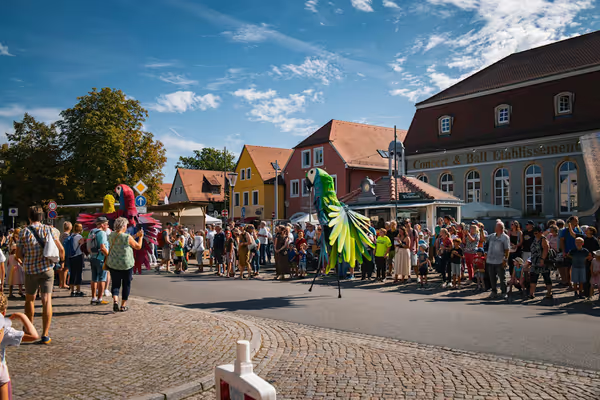
Why Local Traditions Still Matter in a Changing World.
Local traditions are more than customs passed through generations. They preserve identity, strengthen communities, and remind us that culture is lived every day.
 Sophia Harrington
· Printed in pixels, with care.