
The Joy of Traveling Slowly Instead of Seeing Everything.
The most memorable journeys are rarely the busiest. Sometimes staying longer, walking farther, and leaving room for spontaneity reveals more about a place than any carefully planned itinerary ever could.
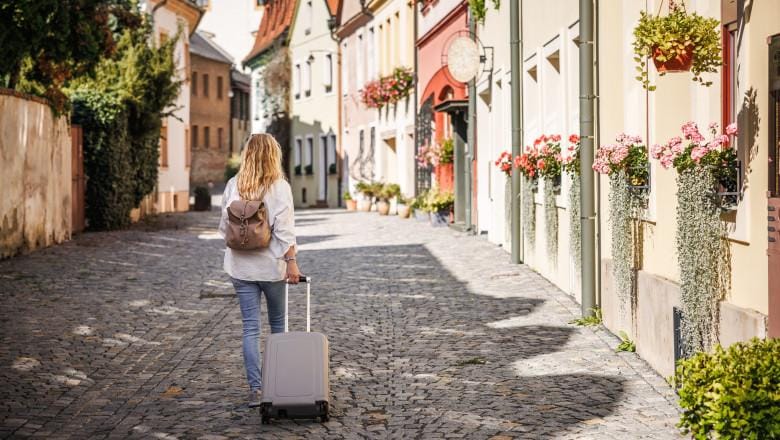
For many years, travel has been measured by numbers. How many countries have you visited? How many cities did you fit into one holiday? How many landmarks can you check off before your flight home? Modern travel often encourages efficiency, turning journeys into carefully planned schedules where every hour has a destination and every destination has a photograph waiting to be taken.
Yet ask experienced travelers about the moments they remember most, and their answers are rarely tied to famous monuments alone. Instead, they recall an unhurried breakfast at a neighborhood café, a conversation with a local shopkeeper, an evening spent watching the light change across a quiet square, or a train journey through countryside they had never expected to see. These memories share one characteristic: they happened because there was enough time for them to happen.
Slow travel challenges the idea that a successful trip depends on seeing everything. Instead, it suggests that seeing less can often help us experience more.
A Different Way to Measure a Journey
There is a natural temptation to make every trip feel productive. Limited vacation time encourages ambitious itineraries that promise to include every museum, viewpoint, and famous restaurant within a few days. While this approach creates excitement, it often leaves little space for curiosity.
A slower pace changes the purpose of travel. Rather than asking, "What else can we fit into today?" the question becomes, "What happens if we stay here a little longer?"
Spending an extra hour in a local market reveals the rhythm of everyday life. Returning to the same café each morning allows familiar conversations to develop. Walking without a destination often leads to hidden courtyards, independent bookshops, or neighborhood bakeries that never appear in guidebooks.
These discoveries rarely become the headline attractions of a journey, yet they frequently become its most treasured memories.
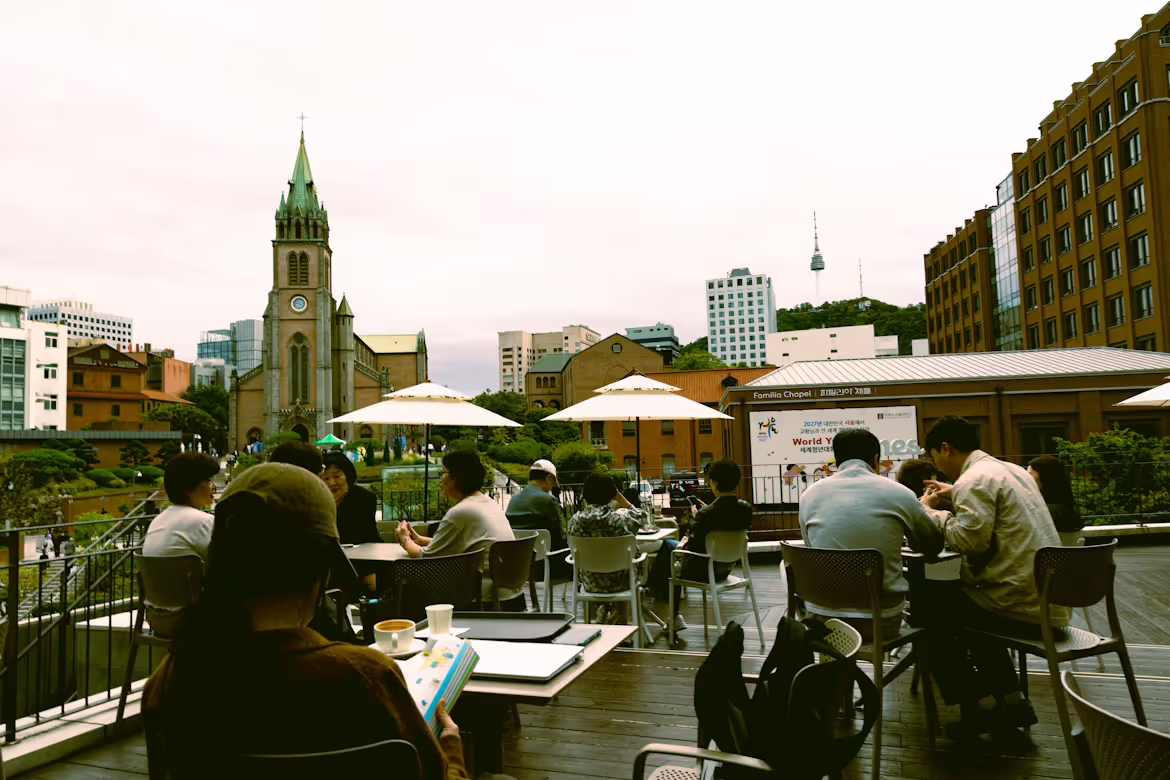
Letting Curiosity Lead the Way
Some of the most rewarding travel experiences cannot be planned in advance.
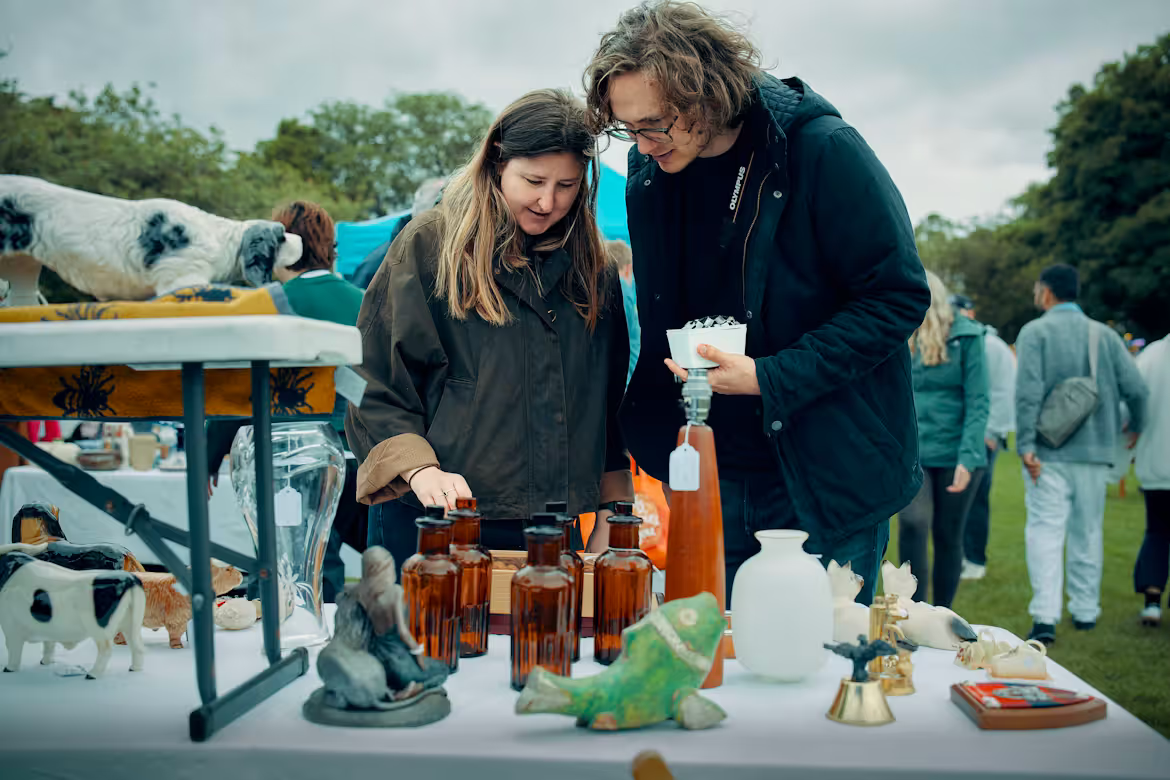
A musician performing in a public square, a weekend market discovered by accident, or a recommendation from a local resident often becomes the highlight of an entire trip. These moments appear when schedules leave room for flexibility rather than filling every hour with reservations.
Walking instead of relying entirely on taxis or public transport also changes the experience. Streets reveal details that disappear when viewed through a car window. Small galleries, family-run restaurants, flower shops, and quiet parks gradually become part of the story of a place.
Curiosity also encourages conversation. Asking a bookseller for a recommendation or speaking with a market vendor about regional ingredients creates connections that extend beyond sightseeing. These exchanges offer perspectives that guidebooks cannot provide because they come directly from the people who know the place best.
Slow travel reminds us that destinations are living communities rather than collections of attractions.
"The richest journeys are often measured by conversations and memories rather than the number of places visited."
Discovering Everyday Culture
Visitors naturally seek famous landmarks, yet much of a destination's identity exists in its ordinary routines.
Watching commuters cycle through city streets before the cafés become busy, listening to church bells echo across a town square, or visiting a neighborhood bakery where residents begin their morning reveals a side of travel that photographs alone rarely capture.
Seasonality also becomes easier to appreciate. A spring flower market, an autumn harvest festival, or the first outdoor cafés reopening after winter all reflect traditions shaped by local rhythms rather than tourist calendars.
Food offers another window into everyday culture. Instead of searching only for highly rated restaurants, exploring family-owned cafés or neighborhood markets often reveals recipes that have been prepared in the same way for generations. Meals become stories about regional history, climate, and community rather than simply another item on an itinerary.
The longer we remain in one place, the more these ordinary details begin to feel extraordinary.
Why Returning Can Be More Rewarding Than Constantly Moving On
Many travelers believe every holiday should introduce an entirely new destination. While discovering unfamiliar places is exciting, returning to a favorite city or village offers a different kind of reward.
Familiar cafés welcome you back. Streets become easier to navigate without a map. Seasonal changes reveal how the same place transforms throughout the year. Shop owners may even recognize returning visitors, turning brief interactions into genuine conversations.
This familiarity encourages a deeper appreciation of place. Instead of rushing to understand everything immediately, travelers gradually notice architecture, traditions, local customs, and neighborhood routines that first-time visitors often overlook.
Returning also removes the pressure to see every attraction. The destination itself becomes enough.
Bringing the Spirit of Slow Travel Home
Perhaps the greatest lesson slow travel offers has nothing to do with travel itself.
It teaches us to pay closer attention wherever we happen to be.
Many people return home with a renewed appreciation for their own communities. They begin walking instead of driving short distances, visiting local markets, supporting independent cafés, or exploring neighborhoods they had previously overlooked. The same curiosity that made another city feel exciting suddenly reveals new details close to home.
In this way, slow travel becomes less about escaping everyday life and more about learning how to experience everyday life with greater awareness.
Conclusion
Travel has never been only about distance. It is about perspective.
While busy itineraries can introduce many destinations, slower journeys often create richer memories because they allow time for observation, conversation, and genuine connection. The places we remember most are rarely those where we saw the greatest number of landmarks. They are the ones where we briefly felt part of everyday life.
As travel continues to become more accessible, choosing to slow down may become one of the most meaningful decisions a traveler can make.
Sometimes the best souvenir isn't something we bring home in a suitcase.
It's the new way we learn to see the world.

Victoria Pemberton
Victoria Pemberton writes about food culture, seasonal cooking, books, and local traditions. She believes everyday experiences often tell the most meaningful stories.
Discussion
More from this issue.
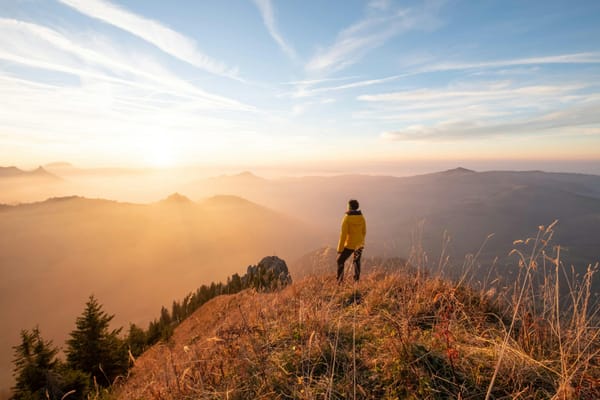
The Value of Starting Again at Any Stage of Life.
A new beginning doesn't belong only to the young. Every stage of life offers opportunities to learn, adapt, and discover a new sense of purpose through the courage to start again.
 Elena Rostova
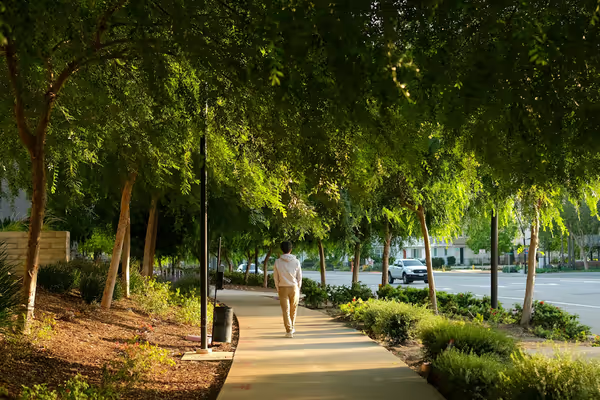
Why Walking Is One of Life's Greatest Simple Pleasures.
Walking is more than a way to get from one place to another. It encourages clearer thinking, healthier routines, and a deeper appreciation for the places we experience every day.
 Richard Sinclair
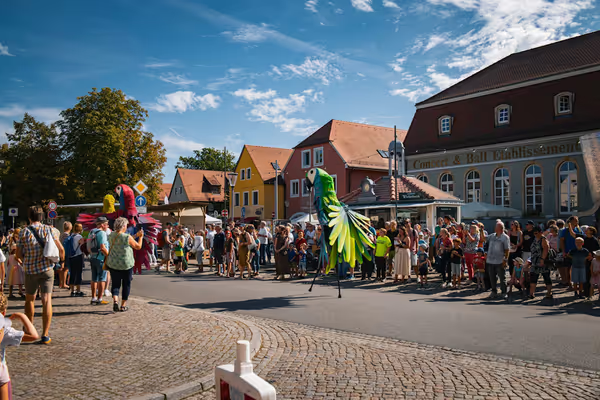
Why Local Traditions Still Matter in a Changing World.
Local traditions are more than customs passed through generations. They preserve identity, strengthen communities, and remind us that culture is lived every day.
 Sophia Harrington
· Printed in pixels, with care.