
The Streets We Walk Shape More Than Our Commute.
The streets we travel each day are more than routes between destinations. Their design quietly influences how we move, interact, and experience the communities we call home.
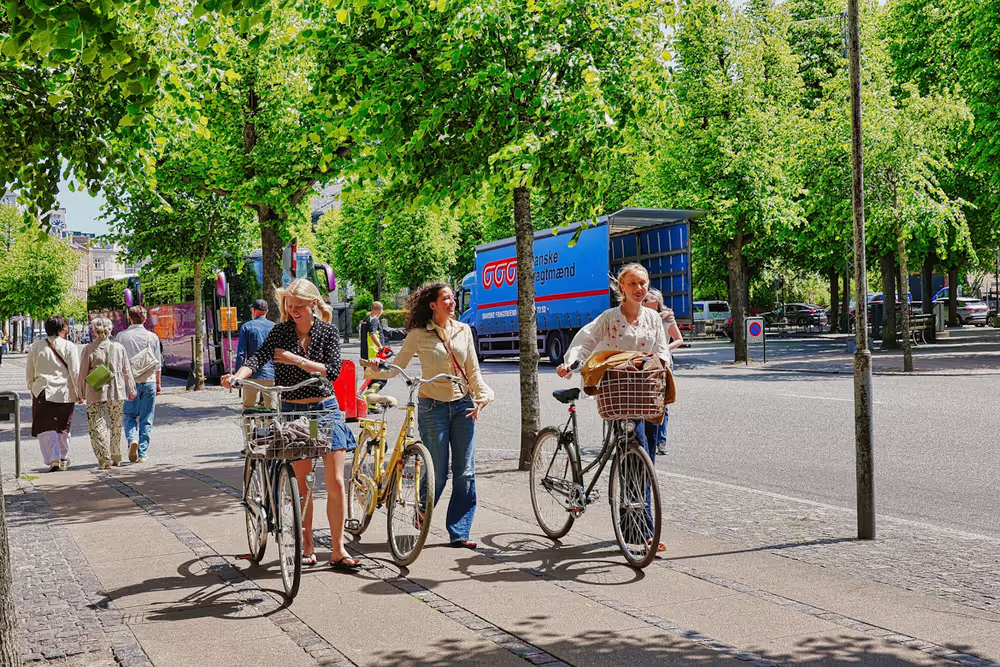
Most of us rarely think about the streets we use every day. They are simply part of the background—a familiar route to work, the path to a neighborhood café, or the shortcut home after an evening walk. Yet these everyday spaces quietly shape how we experience our cities. The width of a sidewalk, the shade of mature trees, the presence of public benches, or the sound of traffic all influence whether a street feels welcoming or merely functional. Urban design is often discussed through infrastructure and planning, but at its heart, it is about people and the quality of everyday life.
More Than Roads Between Places
A street can serve many purposes. At its most basic, it connects one destination to another. At its best, however, it becomes a place where life unfolds naturally. Children ride bicycles after school, neighbours pause to exchange greetings, cafés extend onto wide pavements, and local businesses attract people who choose to linger rather than hurry past.
These experiences rarely happen by accident. They are influenced by thoughtful planning that prioritises people alongside vehicles. Streets with generous footpaths, safe crossings, and inviting public spaces encourage walking because they feel comfortable rather than stressful. When people spend more time outdoors, communities naturally become more active and connected.
By contrast, streets designed solely for moving traffic quickly often discourage the very interactions that make neighbourhoods memorable. Narrow pavements, heavy traffic, and limited green space create environments where people simply pass through instead of spending time together. The difference may seem subtle, yet it shapes how residents experience daily life for years.
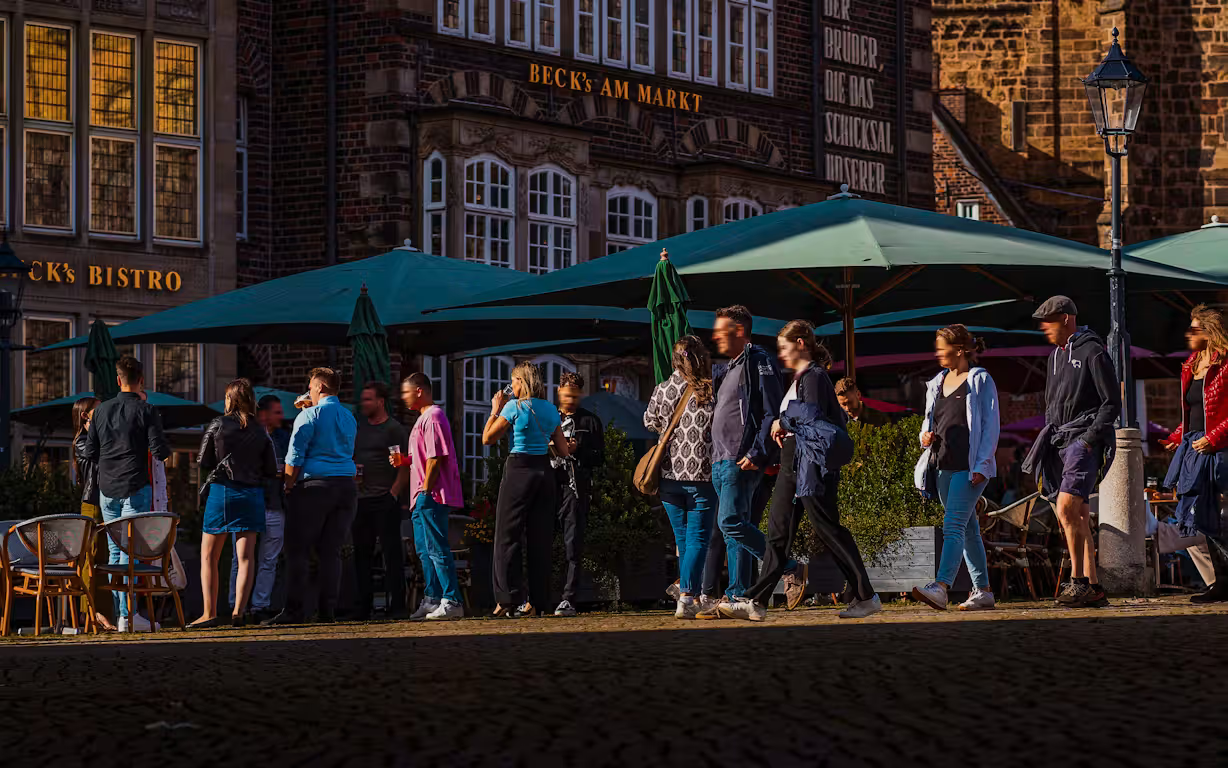
The Quiet Role of Public Spaces
Some of the most memorable moments in a city happen outside our homes. A child learning to ride a bicycle in the local square, musicians performing in a public park, neighbours chatting on a bench after sunset, or friends meeting at the weekend market all depend on spaces designed for people rather than speed.
Public spaces perform an important social role because they welcome everyone. Unlike private venues, parks, libraries, riverside paths, and community gardens invite people from different backgrounds to share the same environment. These encounters build familiarity over time and help create stronger neighbourhoods.
Green spaces deserve particular attention. Even small parks offer benefits that extend beyond recreation. Trees provide shade during warmer months, reduce noise, improve air quality, and create calmer environments where people naturally choose to spend time. Regular access to nature has also been associated with improved well-being, making these spaces valuable not only for the environment but for everyday life.
Well-designed public spaces quietly encourage healthier routines without demanding them. Walking becomes more enjoyable, cycling feels safer, and spending time outdoors becomes an ordinary part of the week rather than an occasional activity.
"The best cities aren't measured only by their skylines, but by how comfortable they make people feel at street level."
Rediscovering the Joy of Walking
Walking is one of the simplest forms of movement, yet it is often overlooked in modern cities. We drive short distances out of habit, rush through familiar routes, and rarely pause to notice the places we pass every day. Choosing to walk, even occasionally, changes that relationship.
A slower pace allows us to observe architecture, seasonal changes, neighbourhood businesses, and everyday moments that disappear when viewed through a car window. We notice the scent of fresh bread from a bakery, the colours of a local flower shop, children laughing in a nearby playground, or conversations drifting from café terraces.
These observations may appear insignificant, but together they create a stronger sense of place. Cities become more than collections of buildings; they become living communities shaped by countless everyday experiences.
Many residents discover that walking also introduces unexpected opportunities for connection. A familiar face seen regularly on morning walks, a conversation with a shop owner, or a spontaneous visit to a local market all become part of a richer daily routine. In this way, walking transforms travel into participation.
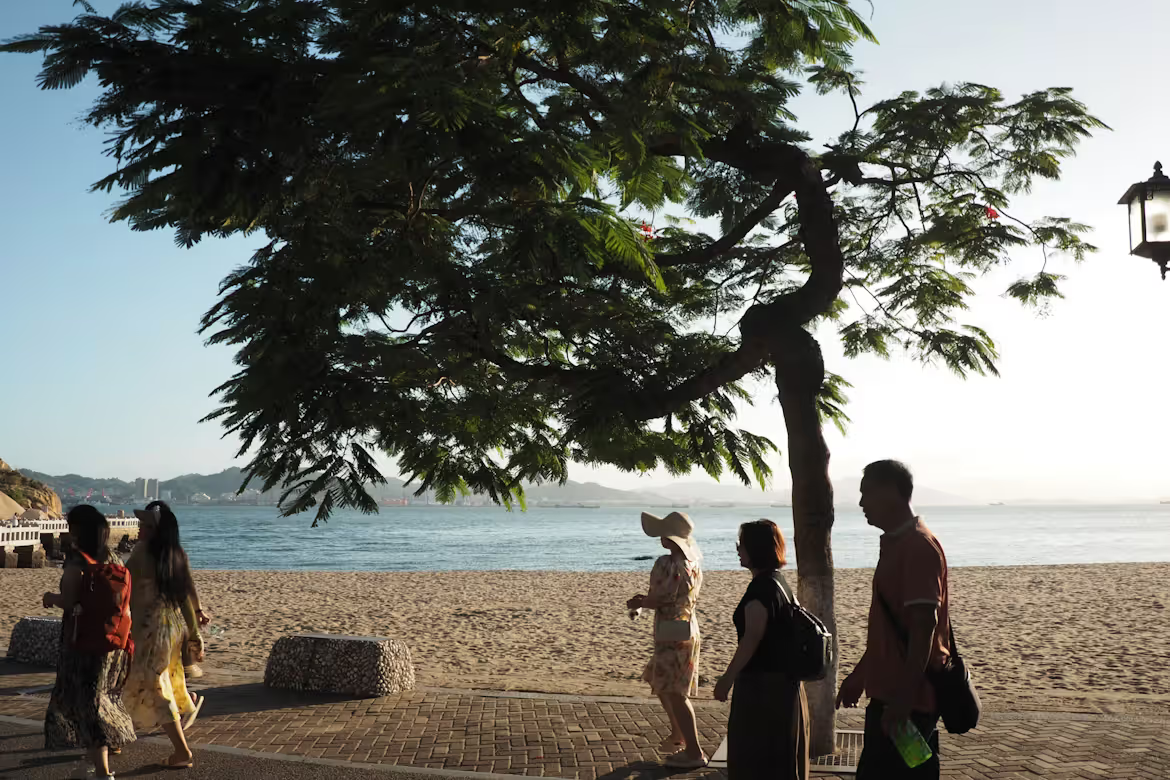
Looking at Our Communities with Fresh Eyes
Every city, town, and neighbourhood has spaces that deserve to be appreciated. Some are grand public squares, while others are quiet residential streets where generations have built their lives. Rather than viewing these places simply as part of a routine, we can choose to experience them with greater curiosity.
Taking a different route home, visiting a park that has always been overlooked, or spending an afternoon exploring a local district on foot often reveals details that routine has hidden. These moments remind us that meaningful experiences do not always require distant travel. Sometimes they begin by paying closer attention to the places we already know.
Communities thrive when people feel connected to them, and that connection grows through everyday experiences rather than occasional events. A welcoming street, a comfortable bench beneath a tree, or a neighbourhood café may seem like small details, yet together they shape how people remember the places where they live.
Conclusion
Cities are often judged by their tallest buildings or busiest business districts, but the true character of a community is usually found at street level. It is reflected in the quality of public spaces, the comfort of a morning walk, and the opportunities people have to meet, pause, and enjoy everyday life together.
The streets we walk each day quietly influence our routines, relationships, and sense of belonging. When they are designed with care, they encourage healthier habits, stronger communities, and a slower appreciation of the places around us.
Perhaps the greatest measure of a successful neighbourhood isn't how quickly we can travel through it.
It's how often we choose to stay a little longer.

Sophia Harrington
Sophia Harrington covers home life, sustainability, and practical living. Her work encourages readers to create comfortable spaces and adopt everyday habits that support a healthier lifestyle.
Discussion
More from this issue.

Why Some Books Are Worth Reading More Than Once.
A favorite book rarely stays the same. As our lives change, the stories we revisit often reveal new meanings, reminding us that reading is as much about personal growth as it is about the pages themselves.
 Victoria Pemberton
Why Local Traditions Still Matter in a Changing World.
Local traditions are more than customs passed through generations. They preserve identity, strengthen communities, and remind us that culture is lived every day.
 Sophia Harrington

Why Quiet Moments Matter More Than Ever.
In a culture filled with constant noise and endless distractions, quiet moments offer something increasingly rare—the chance to think clearly, reconnect with ourselves, and appreciate the present.
 James Thornton
· Printed in pixels, with care.